

Heel Exercises Give Heel Pain the Slip

Heel Pain

Exercise To Reduce Heel Pain

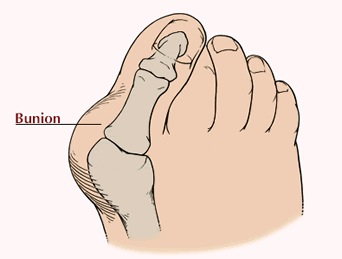
Many people around the world deal with problems with their feet on a daily basis. Because of this, they are forced to find different routes for healing or pain relief.  One major problem that has left people suffering is Plantar Fasciitis. Plantar Fasciitis is a very painful condition that can occur after activities such as jogging, standing or walking on hard surfaces. This condition is very painful to deal with and can take months to heal. A variety of treatments have been available currently in order to treat heel pain such as anti-inflammatory medications and different forms of orthopedics with varying degrees of success. Recently, a discovery was made that has significant implications for plantar fasciitis sufferers.  A stretch involving the heel has the potential to ease and even eliminate the pain of plantar fasciitis in most people. The stretch is deceptively simple. Continue Reading…

Be Happy with X-Static Fibers

XStatic FibersWhat does a fiber have to be happy about, you say? Well, if you walked around laden with silver, you might have a lot more going for you, too.

That’s right, X-Static materials have silver bound permanently into them. We’re not kidding–they’ve been through 250 washings during testing without being affected. (The garments started coming apart, though, so we don’t recommend this as a personal experiment if you’re skeptical.)

But what’s the Big Deal about having silver in your clothes? About 5 Big Deals, we’d say.  Continue Reading…

Benefits of Wearing Wool

Benefits Of WoolWool is a natural insulator, grown by sheep and other animals. Wool fibers consist of an inner core made of protein, which is covered by overlapping scales. The protein core absorbs up to 30% of its weight in moisture without becoming damp or clammy. The scales are durable and hard, reducing wear on the fibers and repelling liquids. The fibers are strong and elastic, usually wavy, or crimped. Wool contains lanolin, which is a natural water-repellant grease. The fleece of the sheep’s wool protects the animal from the wet and cold by turning away rain and water. The crimp of the wool produces insulating air spaces within the fleece, which reduce the flow of heat. The air near the skin is kept dry, providing better insulation, by the core protein absorbing moisture from this trapped air and passing it towards the outside of the fleece. The elasticity and strength of the fibers allow movement of the fleece without losing the air spaces or breaking the fibers. Besides repelling liquid water, the scales help keep the fleece clean, since their outer ends all point in the direction away from the skin and with the movement of the fleece tend to push any dirt away from the skin. Continue Reading…

Special Footwear Needs

Special Footwear Needs

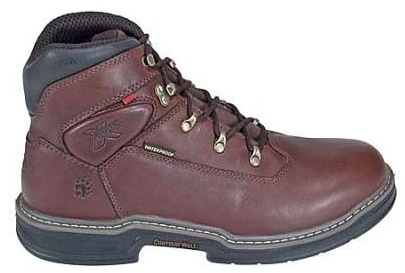
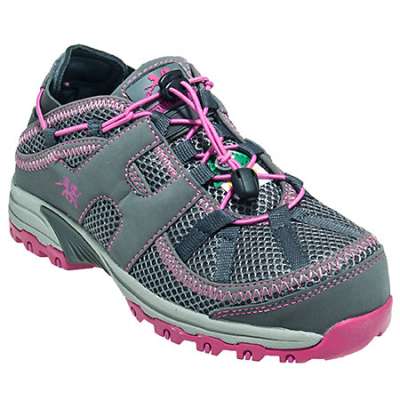
Would you believe that an estimated 10-18 million people (4-7%) of America’s adult population has problems with their feet? With these problems, most need special footwear that you can’t just buy at your local shoe store. At this rate, it is very likely that some of our Working Person customers are dealing with problems with their feet as well. Although some people know why they are having issues with their feet, some may still have no clue what is going on. Some factors causing your foot pain may include aging, complications from injuries, congenital defects or illness like arthritis or diabetes. Continue Reading…

Safety Footwear Features


Safety Footwear

Safety Footwear

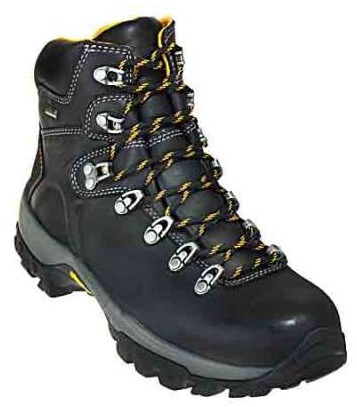
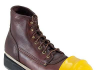
Safety footwear is designed to protect the user from potential work hazards. There are different components that made up safety footwear. These components include safety toe guards, metatarsal guards, electrical hazard ratings, electro static dissipating ratings and the soles of the shoes.

The mission of the Occupational Safety and Health Administration (OHSA) is to save lives, prevent injuries and protect the health of America’s workers. OSHA believes that the employer shall ensure that each affected employee wears protective footwear when working in areas where there is a danger of foot injuries due to falling or rolling objects or objects piercing the sole. Such equipment shall comply with American National Standards Institute (ANSI), ANSI Z-41-1991, “American National Standard for Personal Protection-Protective Footwear” [62 FR 40141, July 15,1997]. To accomplish this, federal and state governments must work in partnership with the more than 100 million working men and women and their six and a half million employers who are covered by the Occupational Safety and Health Act of 1970. Continue Reading…

Effective Fit and Selection of Safety Footwear

Fitting Safety Footwear

The main focus for this article is to inform you on safety footwear features, fit, proper safety footwear selection and how to maintain your safety footwear. We will also identify ways you can care for your feet as well as adding some tips about how to prevent foot discomfort.

The fit and selection of safety footwear is different for each and every person because everyone has a different perception of comfort and each foot has its own special requirements. Only the person wearing the shoe can determine the comfort level and specific needs that the footwear must have. When finding the perfect pair of safety footwear you must consider these issues: heat, moisture, pressure, friction and bacteria. Continue Reading…

Hi-Tec Footwear Gets a Boost of Technology

Hi-Tec Ion Mask

Ion Mask Waterproofing

One of your favorite boots at the Working Person’s Store is getting an update that is sure to make your feet happy. Hi-Tec is implementing a new technology into their boots, called ion-mask. This breakthrough technology gives shoes the extraordinary ability to repel most liquids, including water and oil. With this new technology, liquids simply repel off the surface of the shoe in the form of beads.

Originally patented by Oxford UK-based P2i and was developed to protect soldiers from chemical attack. The ion-mask technology was applied and used on clothing products to keep the soldiers safer. Hi-Tec then pioneered the use of this technology on footwear. Continue Reading…

What Are Those Knife Blades Really Made Of?

Knife Blade Types

Blade Types

Blade steel, the metal used to make blades for knives, is manufactured from a combination of elements that provide the specific features the manufacturer is looking for. Typically, the most common blend is iron and carbon with other materials like chromium, molybdenum, vanadium or manganese.

When deciding which type of blade is best, the job it will be doing is the most important factor. There are a variety of materials which, when combined, will provide the features you most need. While the basic materials used are very important, so is the process used to create the blade. The table below includes some of the more popular types of materials used to create blades. Since some of the terminology is confusing, the following paragraphs explain the terms. Continue Reading…

Blade Shapes

Knife Blade Shapes

For over two million years, knives have been used as tools for survival and sport. The modern knife, while retaining the same basic elements is very different from ancient implements. The shape of the blade wasn’t as important to our ancestors. Since they made their stone or flint blades by hitting them with rocks, they had to take what they got.

Eventually, man figured out how to shape flint to make different types of blades, like a scythe for cutting grain. But we’ve gone well beyond rock and flint. Modern methods were developed to use bronze, copper and iron. We can now shape the blade so it’s uniform and have designed blades in shapes that work best for each job. A variety of features defines each knife. The materials used to make it, like carbon or stainless steel, the shape, the grind and the thickness all combine to make knives that are designed for each application. Continue Reading…

What is Kevlar?

Kevlar

Kevlar Used To Create Cut Resistant Work Gloves

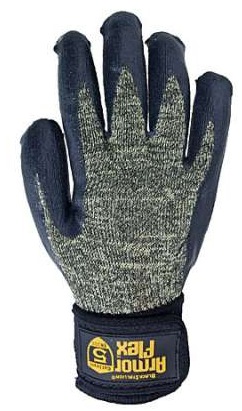
Kevlar is a synthetic material known as a polymer (aren’t you glad you asked?). A Kevlar fiber is an array of molecules that are paralllel to each other like spaghetti in a package. These chains are held together by electrostatic forces between molecules known as hydrogen bonds. The fibers are drawn at a temperature over 750 degrees Fahrenheit. (If you must know, the actual chemical name of Kevlar is poly-para-phenylene terephthalamide, but we didn’t tell you.) Continue Reading…

Page 20 of 22« First...10«1819202122»

Business Blogs - BlogCatalog Blog Directory